
The Marriage of Aisha (RA): Understanding the Historical Context
One of the most common criticisms raised against the Prophet Muhammad ﷺ today concerns his marriage to Aisha (RA). Critics often frame this issue as a moral argument, suggesting that the marriage was somehow unethical.
However, when we examine the argument carefully, we find that it usually relies on two types of moral standards:
Subjective morality – judgments based on modern social norms, cultural values, or personal feelings.
Objective morality – claims based on fixed moral systems derived from religious or philosophical traditions.
Understanding these frameworks is important when discussing historical events.
1. The Subjective Moral Argument
Many objections to the Prophet’s marriage rely on modern societal norms. These norms assume that moral standards today should be applied retroactively to people who lived more than 1,400 years ago.
However, historical analysis requires us to examine actions within their own time and context.
When we look at 7th century Arabia, we find that the Prophet ﷺ married Aisha (RA) in accordance with the accepted customs and moral framework of the society in which he lived (around 623 CE).
Marriage at the onset of physical and mental maturity was widely accepted and practiced.
Evidence from Early Islamic Scholarship
Classical scholars documented that early marriages were common among Arabs.
“It was the custom of the Arabs to marry young girls, and this was something practiced among them. No one objected to it, neither in the pre-Islamic period nor in Islam.”
— Ibn Kathir, Al-Bidaya wa'l-Nihaya (Vol. 3, p. 161)
2. Aisha (RA) and Mental Awareness
Historical sources also indicate that Aisha (RA) described being mentally aware and conscious of her surroundings.
Arabic lexicons explain phrases related to mental awareness or maturity.
From Asas al-Balagha by Al-Zamakhshari:
“I did not know my parents except as followers of Islam from the time I became mentally aware.”
This phrase indicates the point at which a person becomes conscious and mentally aware, suggesting an understanding of one’s environment and circumstances.
3. Puberty and Maturity in Islamic Jurisprudence
Classical Islamic scholarship commonly linked adulthood to puberty and mental discernment.
In Tuhfat al-Ahwadhi:
“Indeed, Aisha had reached puberty when she was nine years old.”
Another statement attributed to Aisha explains:
“When a girl reaches the age of nine, she is a woman.”
Scholars explained that this meant she had attained the awareness and discernment needed to understand benefit and harm.
Similarly, Islamic legal works state that the Prophet ﷺ did not consummate the marriage until she was ready.
“It is known that the Prophet (peace be upon him) did not consummate the marriage with Aisha until she had reached puberty and was ready for marital relations.”
— Fatawa al-Shabakah al-Islamiyyah
4. This Was Not Unique to Arabia
Critics sometimes assume that such practices were unique to Islamic societies, but historical evidence shows otherwise.
Throughout much of the world, marriage was commonly tied to biological maturity rather than a fixed numerical age.
Example from Medieval Europe
In 1200 CE, King John of England married Isabella of Angoulême, who was around 12 years old.
5. Christian and Canon Law
Christian legal tradition also reflected similar norms.
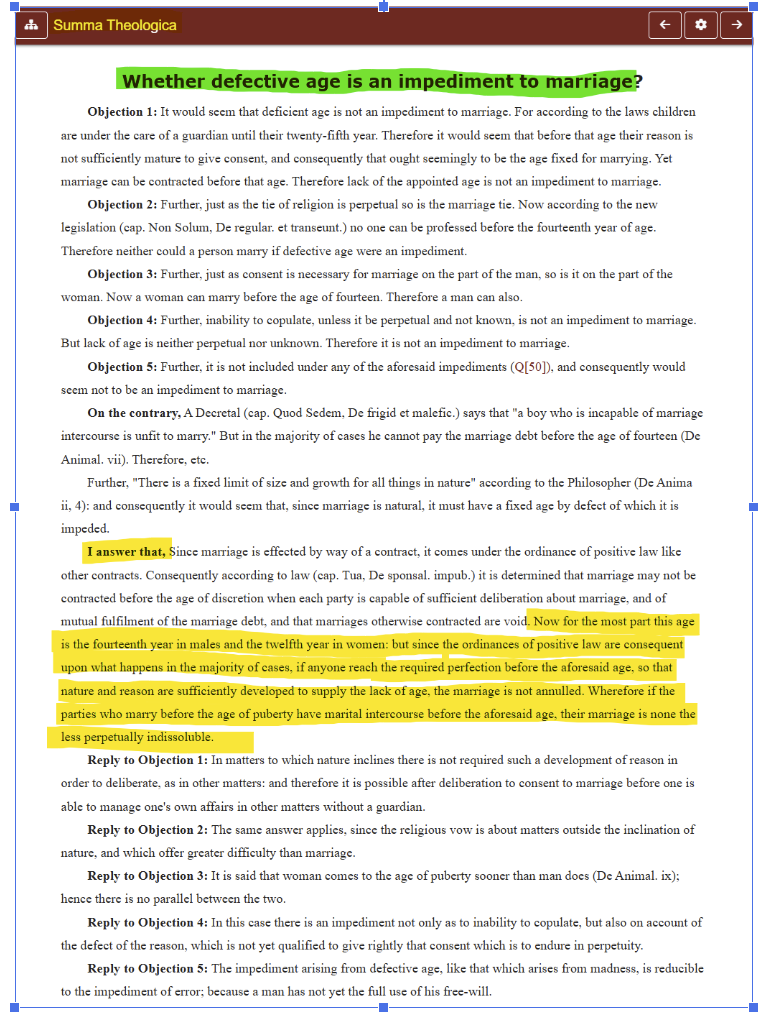
In Thomas Aquinas’ Summa Theologica, discussing Church law, he states:
“Marriage may not be contracted before the age of discretion… generally the fourteenth year for males and the twelfth year for females…”
However, Aquinas also notes that if maturity occurred earlier, the marriage could still be valid.
6. Roman and Early Christian Society
Historians studying ancient Roman society have also noted that girls were often married soon after puberty.
Historical commentary on 1 Corinthians 7:36 explains:
“Puberty was the time when many, if not most, girls were married.”
Families often arranged marriages quickly because the period after puberty was considered the ideal time.
7. English Law and Canon Law
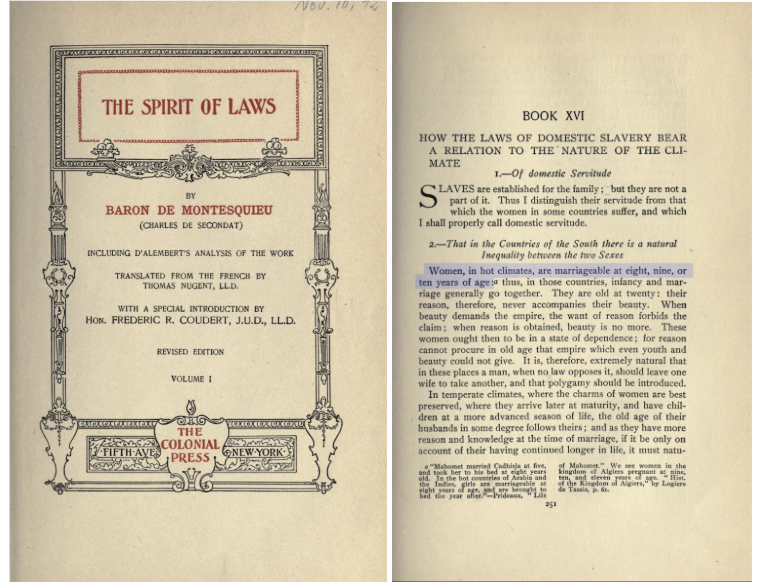
For centuries, English law, influenced by Church canon law, recognized the legal marriage age as:
14 for boys
12 for girls
This again shows that biological maturity, not modern age standards, historically defined marriage readiness.
Conclusion
When the marriage of the Prophet Muhammad ﷺ to Aisha (RA) is examined within its historical context, several facts become clear:
Early marriage was a widespread practice across many civilizations, not unique to Arabia.
Societies historically defined adulthood through puberty and maturity, not fixed ages like today.
Classical Islamic scholarship indicates that the marriage was consummated after readiness and maturity.
No contemporary critics from the Prophet’s time objected to the marriage.
Therefore, applying modern cultural standards retroactively to a 7th-century society leads to a misunderstanding of history.
A fair and academically responsible analysis requires evaluating events within the moral and social framework of their time.